Decode Your Lens on Glasses: The Ultimate 2025 Tech Guide
Decode Your Lens on Glasses: The Ultimate 2025 Tech Guide
Wondering how a single lens can project augmented reality or instantly adapt to sunlight? Modern eyewear technology is evolving faster than ever, transforming a simple lens on glasses into a powerful high-tech tool. This guide decodes the science behind today's most advanced lenses, from AR displays to photochromic and blue-light filtering options, so you can make an informed choice. Ready to upgrade your vision? Explore our curated collection of advanced lens on glasses to experience the pinnacle of clarity and performance.
【Decoding Modern Lens Technology】

The Future is Now: Exploring AR Glasses Lens Technology
Have you ever wondered when augmented reality (AR) will look less like a bulky headset and more like your everyday eyeglasses? That future is closer than you think. A major challenge has always been the complex and cumbersome optics. But new developments are changing the game.
The Miniaturization Challenge: From Four Lenses to One
According to groundbreaking 2025 research from Zhejiang University, engineers have developed a new AR configuration that dramatically simplifies the design. They've managed to shrink a complex system of four separate lenses down into a single, streamlined lens.
This incredible innovation is designed to overcome the physical limitations of current AR headsets. The ultimate goal is to seamlessly integrate this powerful display technology into a standard pair of eyeglasses, making AR more practical and accessible for daily use.
How Metasurface Lenses and AI Create High-Fidelity Images
So, how does this single lens on glasses work its magic? It combines two powerful technologies: a metasurface and a traditional refractive lens. The metasurface, an incredibly thin film of silicon nitrate, expertly shapes and focuses light projected from micro-LEDs.
To ensure the image you see is crystal clear, an AI-powered algorithm works in the background to identify and correct any minor distortions. In lab tests, this system produced images with remarkable fidelity—achieving 74.3% similarity to an original Red Panda image and 88.73% for a Tiger image, all with less than 2% distortion. This is a huge leap forward for creating realistic AR visuals.
Overcoming Production Hurdles for Consumers
Before this technology can land in your hands, a few production hurdles need to be cleared. A primary challenge is keeping the delicate metalens perfectly clean, as even tiny dust particles can interfere with its performance. Researchers are actively developing protective coatings to solve this vulnerability.
Another significant step is moving beyond glued-together lab prototypes. Engineers must develop a robust mechanical platform that can withstand the rigors of daily wear and tear, ensuring your future AR glasses are as durable as they are advanced.
If you're fascinated by the innovation behind a modern lens on glasses, exploring the variety of advanced lens options available today can give you a real appreciation for the technology. Find your perfect high-tech eyewear by browsing our collection of advanced lens glasses.
Light-Adaptive Lenses: How Do Photochromic Lenses Work?
Photochromic lenses, which automatically darken in sunlight and lighten indoors, seem almost magical. But how do these light-adaptive lenses actually function? It all comes down to a science called Visible Light Transfer.
Understanding VLT: What is Visible Light Transfer in Sunglasses?
VLT, or Visible Light Transfer, is a straightforward measurement. It tells you the percentage of visible light that can pass through a lens to reach your eyes. This is often broken down into categories:
* **Category 0:** Allows 80-100% of light through (virtually clear).
* **Category 1:** Allows 43-80% of light through (light tint).
* **Category 2:** Allows 18-43% of light through (medium tint).
* **Category 3:** Allows 8-18% of light through (dark tint, standard for sunglasses).
* **Category 4:** Allows 3-8% of light through (very dark, for intense sun).
A great example is the Ekoi Lumen Pura Vented photochromic lens, which covers categories 0 through 3. It transitions from a nearly clear state to a dark tint that allows just 8-18% VLT, making it incredibly versatile.
The Transition Experience: Speed and Clarity of lenses for variable light
How fast do these lenses for variable light conditions actually change? Top-tier photochromic technology provides a remarkably smooth transition. However, you might notice a slight delay in extreme, high-contrast situations, such as moving quickly from bright sunshine into a dark, wooded area.
Interestingly, some of the best-performing lenses for variable light aren't technically photochromic. Shimano's Ridescape OR tint, for example, is praised for its exceptional performance. It's engineered to provide outstanding contrast and visibility in both bright and low-light conditions without changing its tint.
Frameless vs. Full-Frame Glasses: Which Design is Better for You?
The frame that holds the lens on your glasses is just as important as the lens itself. The two main styles, frameless and full-frame, offer different benefits.
* **Frameless:** This style gives you a completely unobstructed upper field of view. This is a huge advantage for activities where you have a forward-leaning posture, like cycling in an aero position. The downside is that the points where the arms attach can sometimes creep into your peripheral vision, as has been noted with some designs like the Ekoi Lumen glasses.
* **Full-Frame:** A traditional full-frame design, like the Shimano Technium, often provides a more secure and stable fit. Because the frame creates a slight space between the lens and your face, it can improve airflow, which is a key factor in preventing your glasses from fogging up during exertion.
Understanding how VLT works and how frame design impacts performance empowers you to choose the right eyewear. By knowing what to look for, you can find a pair that perfectly matches your needs. Start exploring your options by checking out a wide range of lens on glasses.
【The Great Debate: Are Specialized Lenses Worth It?】
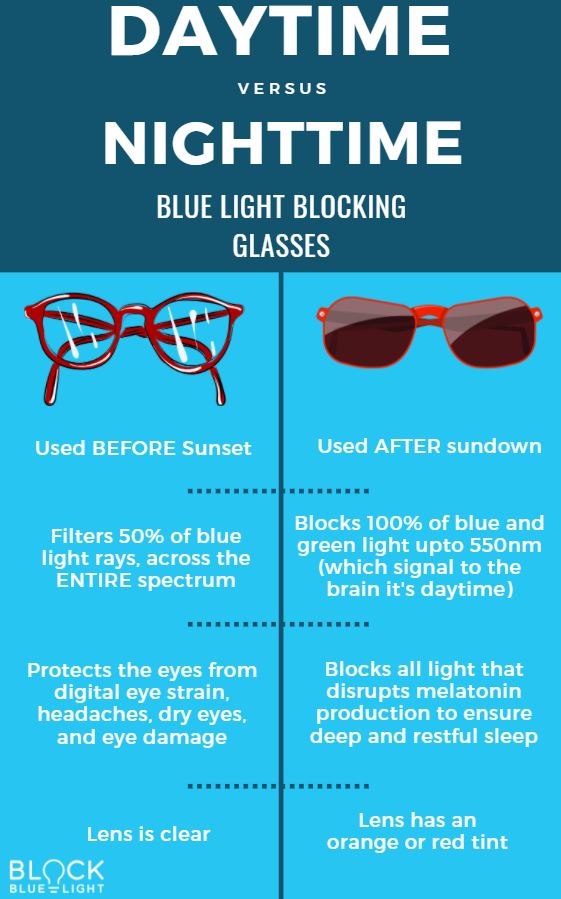
Are Blue Light Blocking Lenses Effective for Digital Eye Strain?
You’ve probably heard the buzz around blue light glasses. But do they actually work, or are they just a trend? Let's look at the science and the expert opinions to find out.
The Science: How Light Affects Circadian Rhythm
All visible light contains blue light waves. During the day, these waves are beneficial, helping to keep us alert and awake. The problem arises at night.
According to sleep science, exposure to blue light after sundown can suppress your body's production of melatonin. Melatonin is the hormone that signals to your body that it's time to sleep. When its production is blocked, your natural sleep-wake cycle, or circadian rhythm, can be disrupted. The screens on our phones, tablets, and computers are significant sources of this potentially disruptive blue light.
The Expert Opinion: Eye Damage vs. Eye Strain
So, is all this screen time harming your eyes?
The American Academy of Ophthalmology states there is no scientific evidence suggesting that the blue light coming from your digital devices causes eye damage. In fact, you get about ten times more exposure to blue light from the sun than you do from your screens.
However, the American Optometric Association acknowledges a very real condition called `digital eye strain from screens`. This refers to a group of vision-related issues resulting from prolonged device use. Symptoms often include blurry vision, dry eyes, and headaches.
The Verdict: Placebo or Practical Solution?
Here's the takeaway: the effectiveness of blue light glasses depends on your goal.
If you regularly use screens after dark and struggle with falling asleep, evidence suggests these glasses can be a practical solution. By filtering the specific blue light waves that inhibit melatonin, they can help your body prepare for rest.
For general `digital eye strain`, however, experts first recommend a simple behavioral change: the 20-20-20 rule. Every 20 minutes, take a break and look at something at least 20 feet away for a full 20 seconds.
If behavioral changes aren't enough to relieve your discomfort, exploring specialized eyewear is a logical next step. You can investigate different types of lenses designed for screen use to find an option that helps ease the symptoms of digital fatigue.
Performance Lenses: A Head-to-Head Comparison
Lens Tints & Adaptability with Photochromic Lenses
* **Shimano Technium (Ridescape OR):** This lens is widely praised as one of the best for activities in variable light, from bright sun to deep shade. It provides superior contrast and clarity without being fully photochromic, making it an excellent choice for both outdoor sports and indoor computer use.
* **Ekoi Lumen (Pura Vented):** This is a true `Photochromic Lenses` option, designed to adapt across multiple VLT categories (0-3). It reacts well to changing conditions like dappled sunlight, though it can show a minor delay when moving between moments of extreme light and dark.
How to Prevent Glasses From Fogging: A Design Comparison
* **Shimano Technium:** The full-frame design of these glasses is engineered to sit slightly further from the face. This small gap significantly improves airflow, making the lens highly resistant to fogging up during strenuous activity.
* **Ekoi Lumen:** As a frameless model, these glasses offer a completely open and unobstructed upper field of view. While its vented design helps with airflow to prevent fog, some users have noted that the arm attachments can be slightly visible when glancing over the shoulder. This is a key factor in learning `how to prevent glasses from fogging`.
Cost and Overall Value
* **Shimano Technium:** Priced around $100, these glasses are positioned competitively against other legitimate, high-performance optics brands, offering strong value for their features.
* **Ekoi Lumen:** This model carries a higher retail price, listed around £187.98. However, it is frequently available at a significant discount, which makes it a much more compelling value proposition for savvy shoppers.
Choosing the right performance eyewear means weighing tint adaptability against fog prevention and cost. To make the best choice for your needs, it helps to see all the options. You can explore a wide variety of performance lens on glasses to compare models and find the perfect pair for your activities.
【Eyewear Care: Your Ultimate Guide to Longevity】

What is the Best Way to Clean Glasses Lenses?
Keeping your glasses spotless isn't just about clear vision; it's about protecting your investment. So, what's the correct way to do it without causing harm? Follow this expert-approved routine for a perfect, scratch-free clean every time.
The 5-Step Expert-Approved Cleaning Routine
1. **Wash your hands thoroughly.** Before you even touch your glasses, wash your hands with soap and water to remove any natural oils, lotions, or grit that could be transferred to your lenses.
2. **Rinse your glasses with lukewarm water.** Hold your frames under a gentle stream of lukewarm tap water. This will wash away dust and debris. Important: Avoid hot water, as high temperatures can damage the delicate coatings on your lenses.
3. **Apply a tiny drop of lotion-free soap.** Use a single, small drop of basic, lotion-free hand soap on your fingertips and lather it slightly.
4. **Gently rub the entire pair.** With the soapy lather, carefully rub both sides of the lenses. Don't forget the rest of the frame, including the nose pads and the ends of the arms where grime builds up.
5. **Rinse and dry completely.** Shake off any excess water droplets and then dry your glasses thoroughly using a clean, soft, lint-free cloth. For a perfect polish, `cleaning glasses with microfiber cloth` is the gold standard.
What to Avoid: Common Cleaning Mistakes That Cause Scratches
You might be tempted to use whatever is handy, but many common cleaning methods can ruin your lenses. Here’s what to steer clear of:
* **Washing-up liquid:** While it seems like a good soap, many dish detergents contain aggressive surfactants. These can cause "crazing"—a web of fine cracks on your lens coatings that will permanently impair your ability to `how to reduce glare on glasses`.
* **Household Glass Cleaner:** The chemicals in products like Windex are far too harsh for your eyewear. They can strip the protective coatings from your lenses and wear away the varnish on your frames.
* **Your own saliva:** This is a major no-go. A 2022 study published in the National Library of Medicine warns that cleaning lenses with saliva can transfer harmful bacteria from your mouth to your eyes, increasing the risk of corneal infections.
* **Your shirt tail or paper towels:** These materials feel soft, but they contain coarse wood fibers or can trap abrasive grit. Wiping your lenses with them is a leading cause of `preventing lens scratches on eyeglasses` from failing.
Essential Eyewear Maintenance Tips
Proper Storage and Handling
* Always store your glasses in a rigid, hard-shell case when you aren't wearing them. This is the single best way to protect them from being crushed, bent, or scratched in a bag or on a nightstand.
* Never place your glasses with the lenses facing down. This simple habit prevents accidental scratches from direct contact with hard surfaces.
* Avoid leaving your glasses on a car dashboard. Extreme heat can warp plastic frames and, as with hot water, can damage the delicate technology behind your `lens coatings explained`.
Why You Shouldn't Wear Glasses on Your Head
Pushing your glasses up onto your head might feel convenient, but it's a habit that optometrists universally dislike. Optometrist Daniel Hardiman-McCartney calls it an "optometrist's pet hate" for good reason.
Doing so stretches the hinges and widens the arms, gradually ruining the precise fit engineered for your face. It also exposes your lenses to hair products and natural oils, making them dirtier and increasing the risk of them falling off and getting damaged.
The Crucial Role of the Microfiber Cloth
Using a clean microfiber cloth is the best way to safely polish your lenses. The key word here is *clean*. A dirty, gritty cloth will do more harm than good, grinding debris directly into your lenses.
Experts recommend investing in a high-quality, washable microfiber cloth. Be sure to clean it regularly with lotion-free soap and let it air dry. This ensures it remains a safe and effective tool for maintaining your eyewear.
Proper care is essential, but it's much easier when you start with a high-quality product. If your current eyewear seems to scratch easily or the coatings are failing, it might be time to investigate more durable options. Discovering a modern, resilient lens on glasses can make all the difference in achieving long-lasting clarity and performance.
【Your Complete Guide to Choosing and Caring for Modern Lenses】
In summary, the world of eyewear is brimming with innovations that enhance vision, comfort, and daily life. We've explored the cutting-edge of AR technology, where complex systems are being condensed into a single, high-fidelity lens on glasses, promising a future of seamless integration. We also delved into the science of photochromic lenses, understanding that Visible Light Transfer (VLT) is the key metric that governs their ability to adapt to changing light conditions, offering versatility for any environment. Furthermore, we addressed the ongoing debate about blue light blocking lenses, clarifying that while they may not prevent eye damage, they can be a practical tool for improving sleep hygiene by supporting your natural circadian rhythm. Finally, we emphasized that the longevity of any advanced lens hinges on proper care. Following a simple, expert-approved cleaning routine and avoiding common mistakes—like using your shirt or harsh chemicals—is crucial for protecting your investment and ensuring lasting clarity. By understanding these key aspects of lens technology, frame design, and maintenance, you are empowered to select the perfect eyewear that not only meets your vision needs but also complements your lifestyle.
``` MjAyNTA3MjExMDE3MTM 当前显示MjAyNTA3MjExMDE3MTM。


Comments
Post a Comment